You are here: Cavallerizze
Art+Design
5vie event
physical event
Info
Cavallerizze
Via Olona, 4
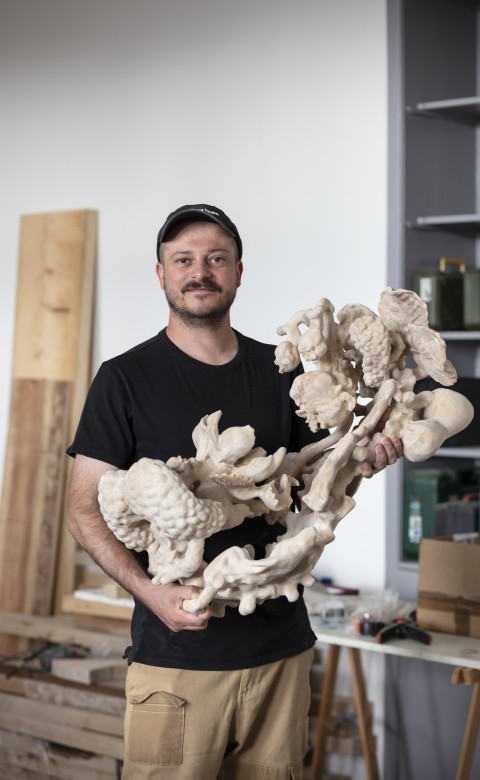
The project presents three new lamps carved from solid wood – one suspended and two standing. The works emerge from a hands-on practice rooted in carving and directly shaping the material.
Each piece develops through the resistance, grain and internal structure of the wood, allowing the form to gradually appear through the process of making.
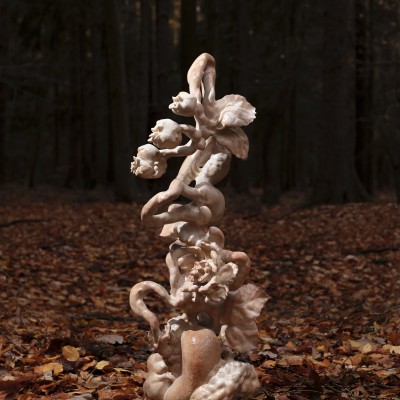
The lamps are inspired by the moment when a seed begins to open and a sprout pushes outward from within. Their elongated bodies seem to grow under internal pressure, balancing vertical and horizontal tension. The forms appear fragile yet carry structural strength – like an organism in an early stage of growth that has not yet fully settled. Light does not decorate the object; it inhabits it.
Conceptually, the lamps can be understood as seeds connected to the Sorbus sudetica series. Sorbus sudetica is a rare hybrid tree that grows in the Northern Bohemian mountains. The species survives through asexual reproduction and exists primarily as a single genetic individual divided into approximately 150 clones. It is estimated to have persisted for nearly 20,000 years thanks to its highly specific adaptation to a single place.
In this context, the lamps can be seen as germinating bodies – potential beginnings of the same organism. Their forms evoke seeds that carry the genetic memory of the tree and slowly unfold into new structures.
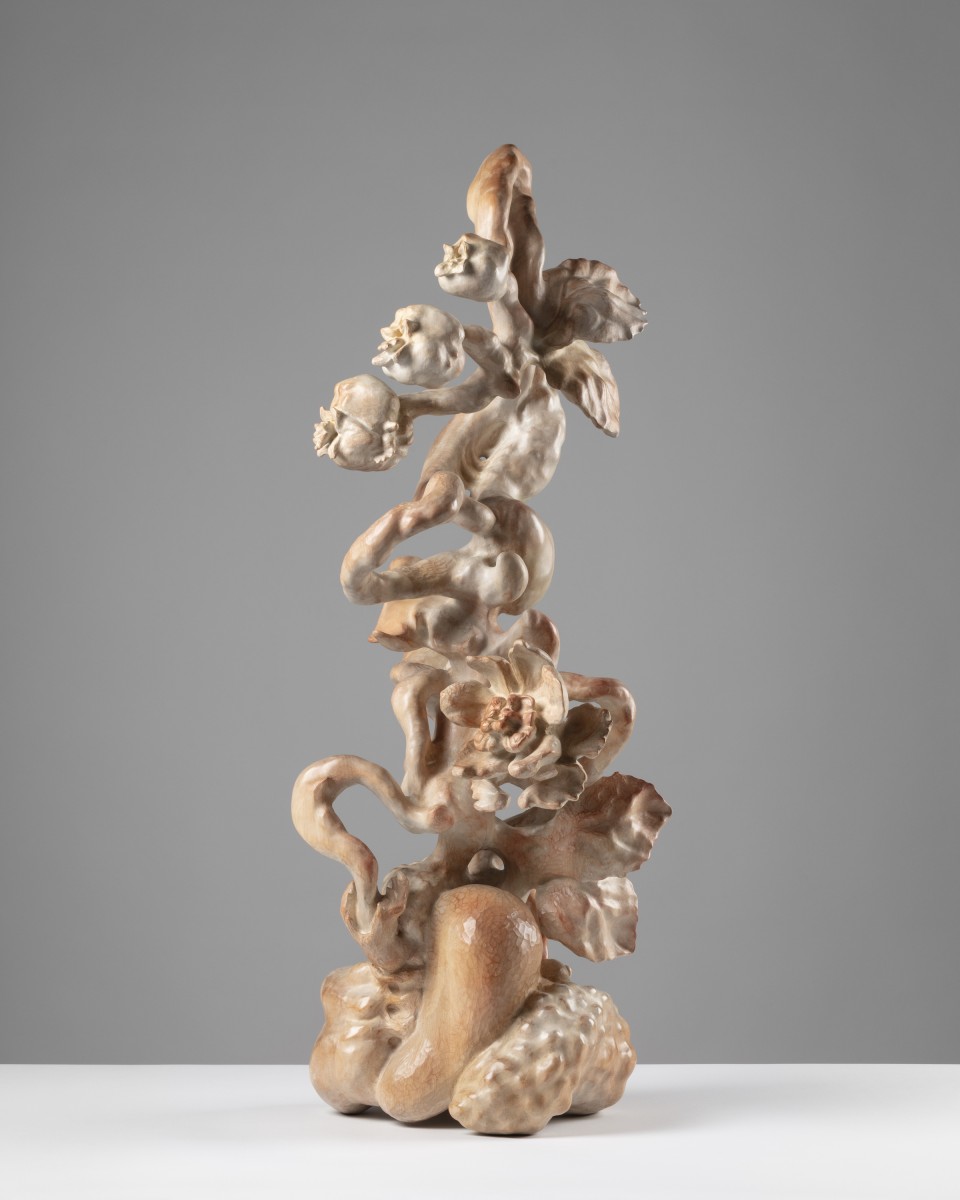
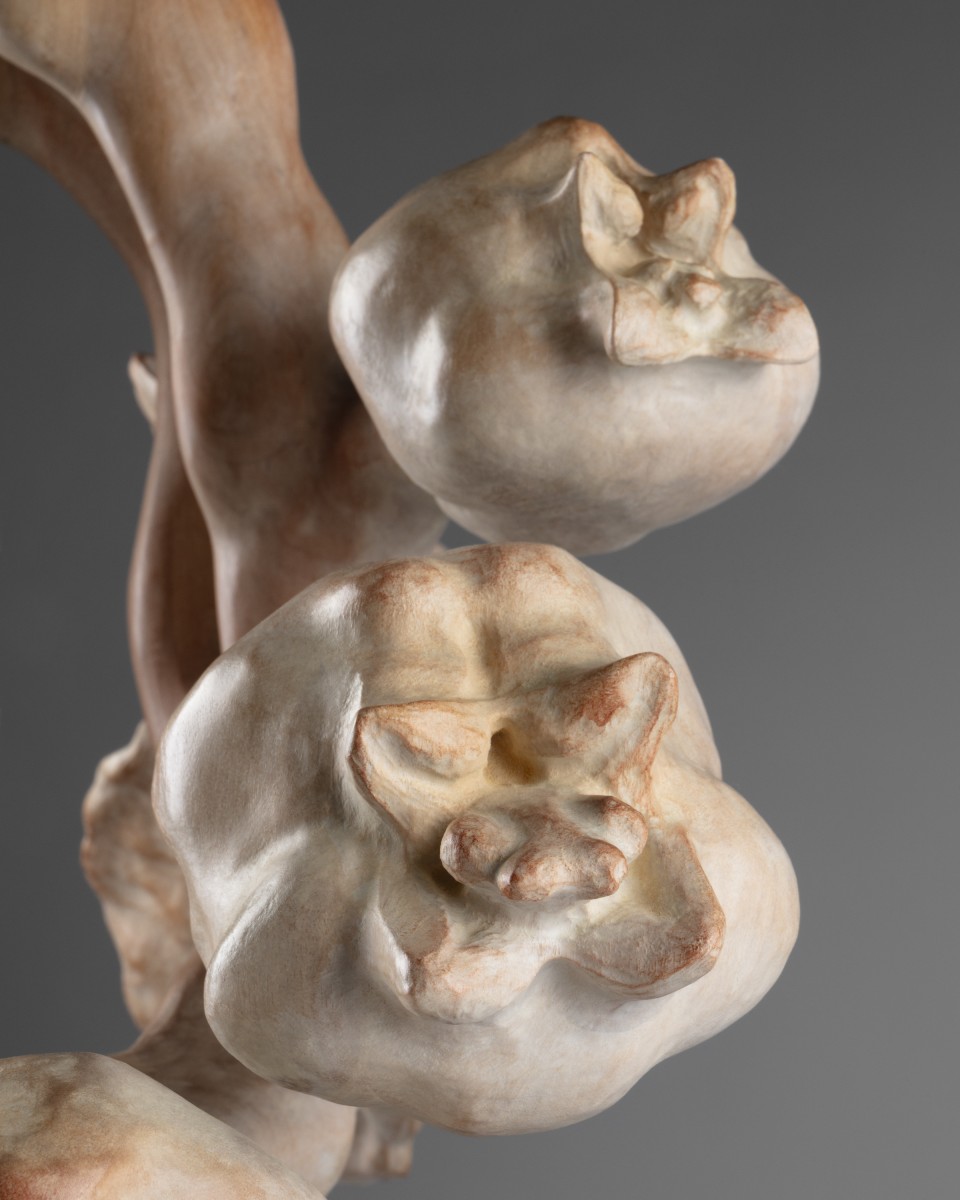
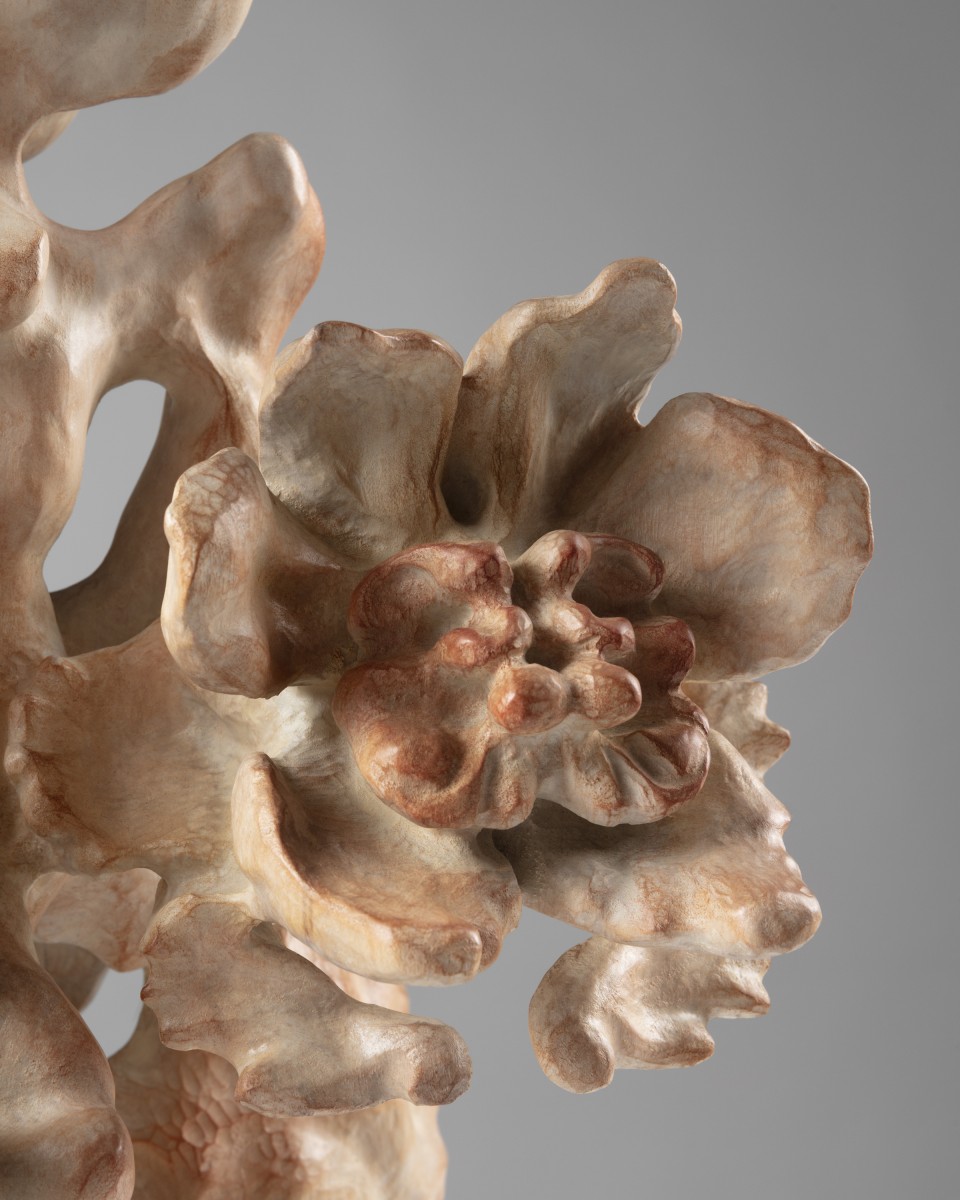
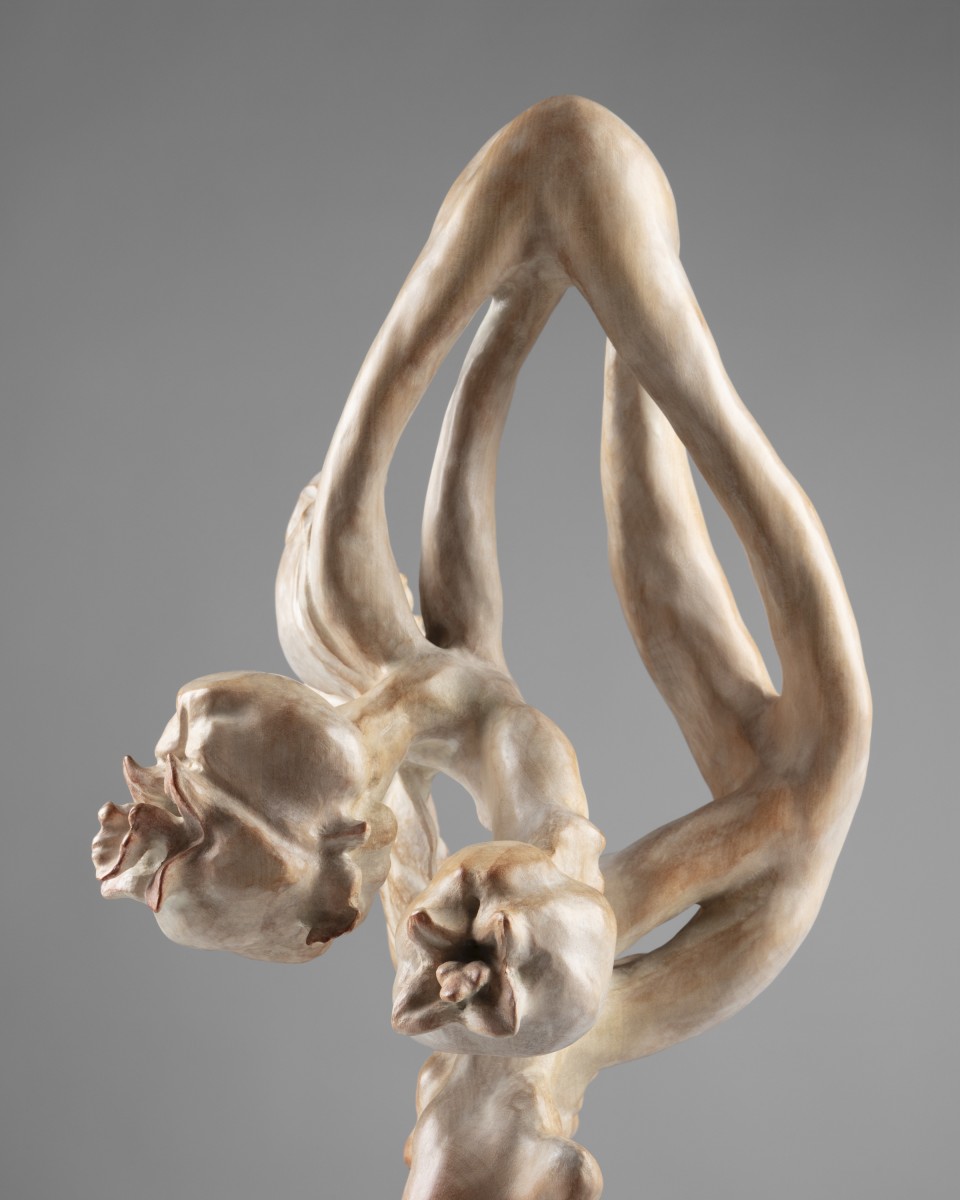
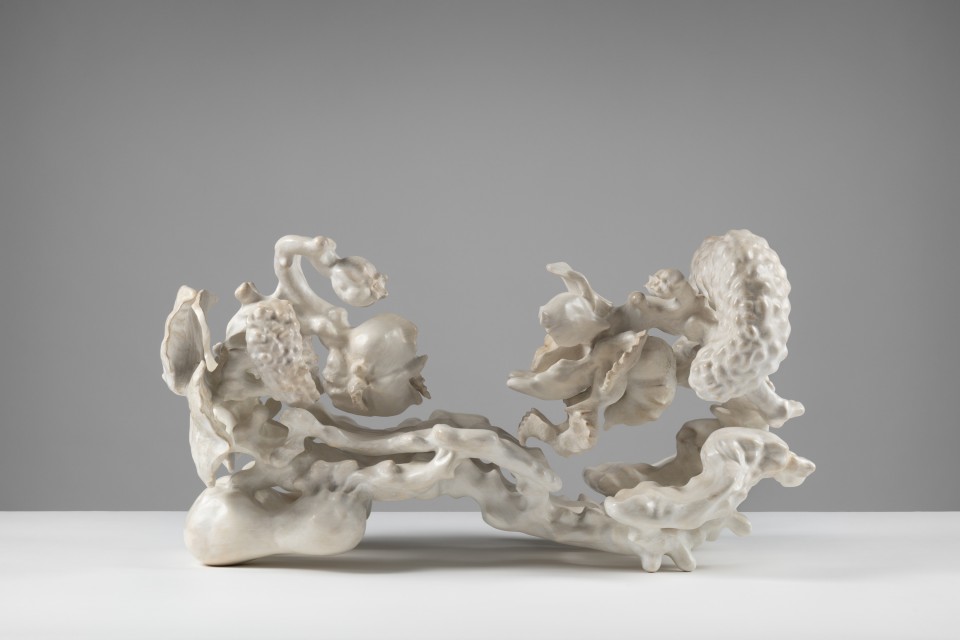
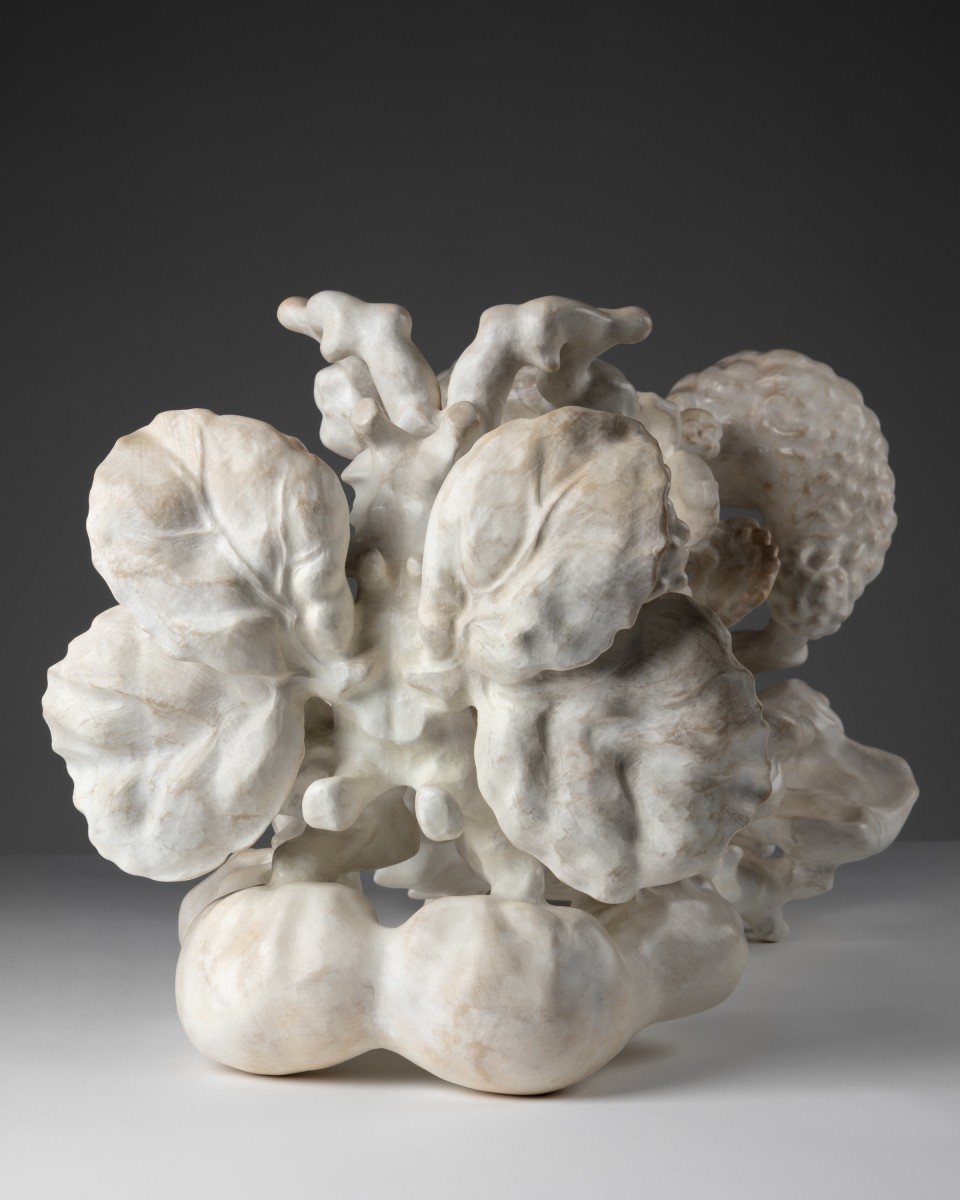
Alongside the lamps, sculptural works from the Sorbus sudetica series are presented. These sculptures explore hybridity as both a theme and a method. Several of the works begin from the form of a human reproductive organ used as a symbolic seed, from which hybrid organisms gradually develop. Subtle insect-like features appear within the structures, referring to insects as carriers of genetic information and to the role of pollination in shaping living systems.
The sculptures often capture a moment of division and growth, when one body begins to split into two forms that still remain connected. Fruits and flowers appear at different stages of maturity, suggesting cycles of reproduction and transformation. Through carving, waxing, patination and pigment infusion, the material surface undergoes its own gradual transformation, creating pale, bone-like structures that still carry subtle traces of life.
Together, the lamps and sculptures form a small ecosystem of emerging bodies. The works explore hybridity, adaptation and persistence, reflecting on how living systems carry memory through time and remain connected to the environments in which they evolve.